PegaProx for Proxmox VE clusters continues to evolve from a simple idea into a more complete solution that addresses real world needs in enterprise virtualization environments. One of the most frequently requested features has been a centralized logging capability, and this is exactly what is now being introduced. Instead of having to manually collect logs from individual nodes, administrators can now rely on a built in and streamlined approach that gathers, processes, and makes logs accessible from a single place. This makes troubleshooting faster, improves visibility across the entire cluster, and reduces the operational overhead that typically comes with distributed systems.
Centralized logging, just like CIS benchmarks, security scanning and OIDC authentication, play critical roles in modern infrastructure. In environments where multiple nodes, services, and virtual machines interact, having logs scattered across systems quickly becomes a problem. Important events can be missed, correlation becomes difficult, and incident response slows down significantly. By consolidating logs into one consistent view, it becomes much easier to identify patterns, detect anomalies, and maintain a clear understanding of what is happening inside the cluster at any given time.
In many discussions with enterprise users, there has been a clear demand for simpler and more lightweight alternatives to established logging stacks such as Splunk or Graylog. While these platforms are powerful, they often introduce additional complexity, infrastructure requirements, and cost that are not always justified for smaller Proxmox clusters or more focused use cases.
Centralized Log Management for Proxmox with PegaProx
I took the opportunity over the Easter holidays to focus on something that has been on my list for quite a while. With a few uninterrupted days available, I started building a dedicated high performance logging server from the ground up in Rust. The goal was to create something lightweight but powerful, with native support for both UDP and TCP ingestion, optional encryption for secure transport, and flexible storage backends using SQLite for smaller setups and PostgreSQL for more demanding environments. This project became what I initially called ProxLog.
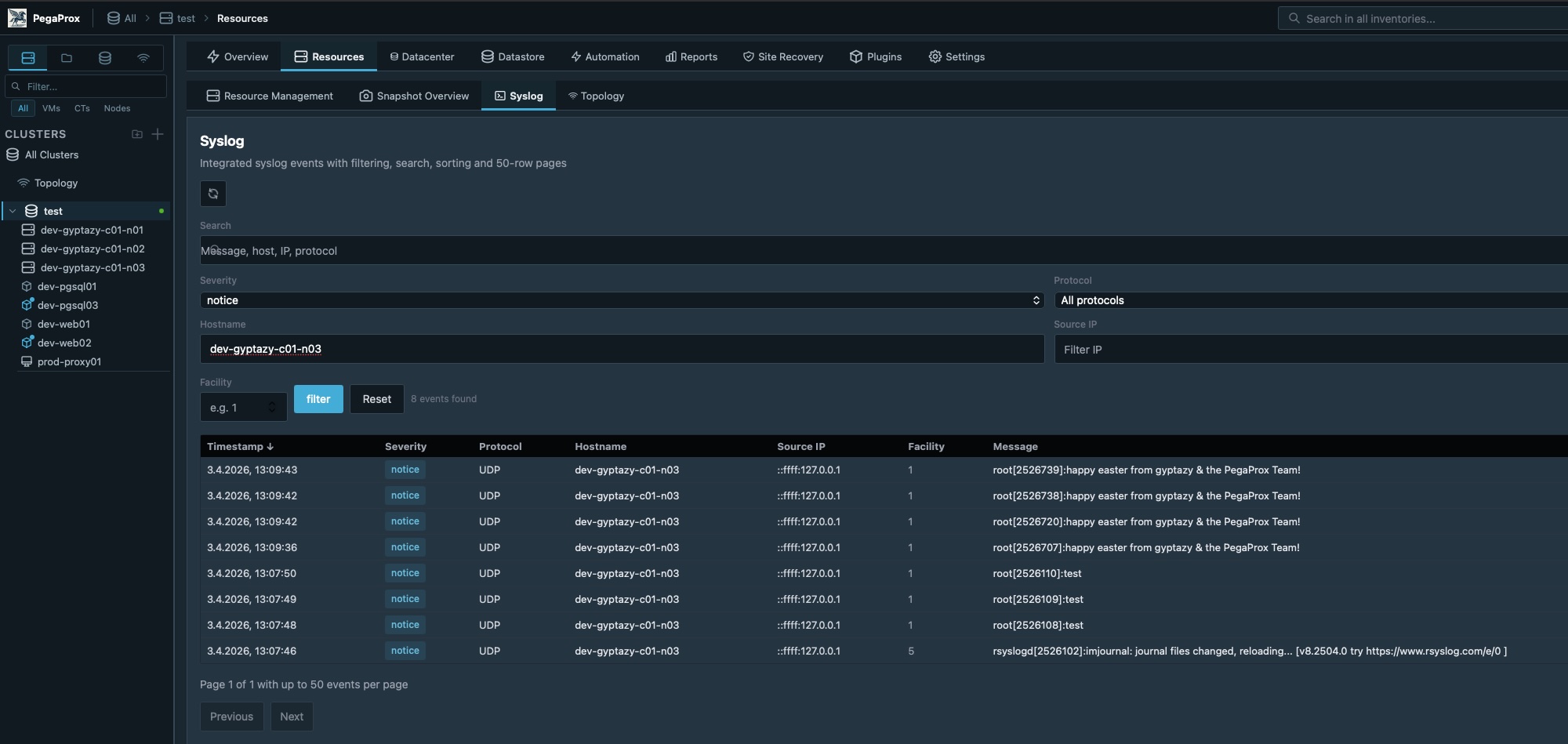
During the implementation it quickly became clear that running this as a completely separate component would solve one problem while introducing another. Managing yet another service, handling integration points, and maintaining consistency between systems did not align with the original idea of keeping things simple and efficient. That is when the decision formed to bring everything together and integrate the functionality directly into PegaProx, creating a single, cohesive interface instead of multiple moving parts.
As part of this shift, I reworked the syslog server component of ProxLog which was written in Rust and rewrote it in Python to match the existing language and structure of PegaProx. This allowed for tighter integration, shared configuration handling, and a more consistent development and maintenance workflow. At the same time, I built out the frontend components that are essential for day to day operations. This includes intuitive log browsing, flexible filtering capabilities, and auditing features that make it easier to trace events and understand system behavior over time.
The result is more than just a logging backend. It is a fully integrated logging experience within PegaProx that aligns with the overall goal of reducing complexity while still meeting enterprise requirements. By combining ingestion, storage, and visualization into a single platform, it removes the need for external tools and creates a streamlined workflow that fits naturally into Proxmox VE cluster management.